
Of the Rs 1.97 trillion that the government intends to spend on all 14 production-linked incentive (PLI) schemes, around Rs 41,000 crore remains unutilised as of now, according to a senior government official. This means that 80 per cent of the total allocated amount, or Rs 1.56 trillion, will be used to pay incentives to companies eligible to claim benefits over the next few years. The unutilised amount/savings result from undersubscription, lukewarm responses in the case of schemes such as textile, as well as a reduction in the allocation of schemes.

India's smartphone shipment grew by 11.5 per cent in the first quarter of calendar year (CY) 2024 on a year-on-year basis to 34 million units. This is the third consecutive quarter of growth in shipments, International Data Corporation's (IDC) Worldwide Quarterly Mobile Phone Tracker said.

On the revenue front, the finance ministry was expecting higher proceeds from non-tax revenue.

Populism gains momentum during election periods, and this trend is evident in at least four states: Telangana, Rajasthan, Madhya Pradesh and Chhattisgarh.

The states will forego around Rs 44,000 crore of tax revenue after they reduced VAT on petrol and diesel in the reminder of the fiscal but higher central tax devolution of Rs 60,000 crore will offset the losses, according to a report. After months of calls for lowering the taxes on the fuels, the Centre on November 4 cut excise duty on diesel by Rs 10 a litre and by Rs 5 on petrol. Following this, as many as 25 states and Union territories have lowered value-added tax (VAT) on these fuels.

Leaving behind apprehensions of a rise in interest rates and petro duty cut impacting budget numbers, the officials are now confident of keeping the fiscal deficit within the targeted 4.6 per cent of the gross domestic product.

Allocation of portfolios would be the immediate vexatious issue for the party, with supporters of Virbhadra Singh already feeling sidelined after the elevation of the late chief minister's professed rival Sukhu.

The fiscal deficit, estimated at 4.6 per cent of the gross domestic product, is expected to be around 5.6 per cent, mainly on account of factors like subdued revenue collection, poor disinvestment receipts, high global commodity prices and increasing subsidy bill.

There is a link between objectives and commitments.

Most families had high value currency notes and they used it for making payments during the pre-demonetisation era.

While the session will begin with the President's address to the joint sitting of the two Houses, the same day the pre-budget economic survey will be tabled.

Given the gap between budgetary allocation and use, a parliamentary standing committee has asked the Ministry of Ayurveda, Yoga and Naturopathy, Unani, Siddha and Homeopathy (Ayush) to take steps to prevent underutilisation of funds under the National Ayush Mission (NAM) scheme. According to the data, the ministry was allocated Rs 1,200 crore for the mission in the Budgetary Estimate (BE) for FY24. The Revised Estimate (RE) for the year fell to Rs 815 crore, of which Rs 589 crore, or 74 per cent, has been spent till January.

The central government's Great Nicobar development project, proposed around an unprecedented transhipment port, will be executed to keep environmental impact minimal, and is essential as it is of national importance, the government has said amid calls to abort the controversial project due to ecological concerns, the Centre said in an official statement.
Growth rate in per capita income is projected to fall to the lowest in 21 years this financial year - except for the financial years 2019-20 (FY20) and 2020-21 (FY21) - according to the first advance estimates. During the last 21 years, the two periods - FY20 and FY21 - saw growth rates in per capita income lower than 7.9 per cent, seen during FY24. This was despite the real gross domestic product (GDP) being projected to grow by 7.3 per cent in the current financial year by the first advance estimates.

The government was exploring options to secure higher dividend payment from state-run companies.

'We are in a position to start due diligence and private data room access shortly.'

The government would fall short of its target for direct tax collections for the second consecutive year, with the revenue department estimating its direct tax receipts at Rs 3,70,000 crore (Rs 3700 billion) for 2009-10.

Because of global economic meltdown and stimulus packages provided to industry.

True to word, here's a hotel chain that gives you more than your budget.

Measures that quickly boost demand and increase employment are needed to push up growth. Moreover, without announcing new planss, the government should strengthen schemes such as PM KISAN, MNREGA and programmes to build rural roads.
The Budget gave a big boost to power reforms programme by increasing allocation to Rs 2,080 crore (Rs 20.80 billion), or a rise of 160 per cent from the previous fiscal.

They may be on the same side of political power, but that did not stop Railway Minister Mamata Banerjee and her predecessor Lalu Prasad from taking pot-shots at each other during the presentation of Railway Budget in the Lok Sabha.

'Not disclosing information to the public indicates that there is something wrong with Project Cheetah.'
Though India is one of the fastest growing economies, how big is the country's budget compared to other countries in the world?

Rural budget set to increase; likely to enhance market linkages for agri commodities

Current account deficit in 2010-11 will be well below 3.0 per cent of GDP.

After the RBI surprised the Centre with a record Rs 99,122 crore in surplus transfer for FY21, analysts said this will help the government tide over the revenue losses from lockdowns and extend more support to the pandemic hit industries and to the poor people. In fiscal 2020, the RBI had paid only Rs 57,128 crore in dividend to the government and the finance minister had budgeted only Rs 45,000 crore from the central bank. The higher payout followed the Bimal Jalan panel report that had set a new economic framework capital buffer for the central bank along with the contingency risk buffer at 5.5 per cent.

The capital outlay to cover the modernisation programmes have got a hike of 10.05 per cent.

Govt may tighten presumptive taxation norms and also do away with some deductions.
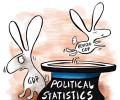
It is also likely to assume a deflator of around 4 per cent. That could take the nominal GDP outlook for FY21 to around 10 per cent. It is this nominal GDP forecast on the basis of which the finance ministry is calculating key Budget targets like the fiscal deficit as a percentage of GDP and tax revenue growth for the coming year.

India's gross tax collections soared to a record high of Rs 27.07 lakh crore in the fiscal year ended March 31, led by impressive growth in corporate tax and customs, taking the tax-to-GDP ratio to an over two-decade high of 11.7 per cent, Revenue Secretary Tarun Bajaj said on Friday.

Finance Nirmala Sitharaman on Friday asked various ministries to try to spend more than their capital expenditure targets as well as explore public private partnerships for viable projects. During a meeting with senior government officials to discuss the infrastructure roadmap, she also urged the ministries and their CPSEs to ensure clearance of Micro, Small and Medium Enterprises (MSME) dues at the earliest. This was the fifth review meeting by the finance minister with ministries and departments on the infrastructure roadmap.
Pranab Mukherjee proposed the enhancement of the overall plan budget for higher education by Rs 2,000 crore over the Interim Budget estimates. He further announced the allocation of Rs 2,113 crore for IITs and NITs, which includes a provision of Rs 450 crore for new IITs and NITs. The finance minister also proposed to allocate Rs 827 crore for opening one central university in each uncovered state.

The coaching-tuition-profiteering model built on the back of a broken education system is a scandal and an abomination, and must go, asserts Shekhar Gupta.

On the basis of Budget projections, the Centre needs Rs 7.3 trillion revenue during December-March and its expenditure must be limited to Rs 6.7 trillion.

In a Q&A with Doordarshan, Jaitley discusses how he chose the areas on which he would spend more.
The railways total earnings recorded an 8.3 per cent growth at Rs 33,900 crore (Rs 339 billion) up to December this year as compared to the corresponding period in the previous year.

'The household sector, which is still the largest contributor of financial savings, has been experiencing a decline in the last six years, and it has fallen below 8% of GDP.'

'Short term volatility is likely due to various factors, global and domestic; investors may use this as an opportunity to increase the allocation to equities.'

'We will prioritise our requirements so that the country's maritime interests are not compromised.'
